One Without a Second?
A Dialogue on Consciousness, Existence, and the Nature of God
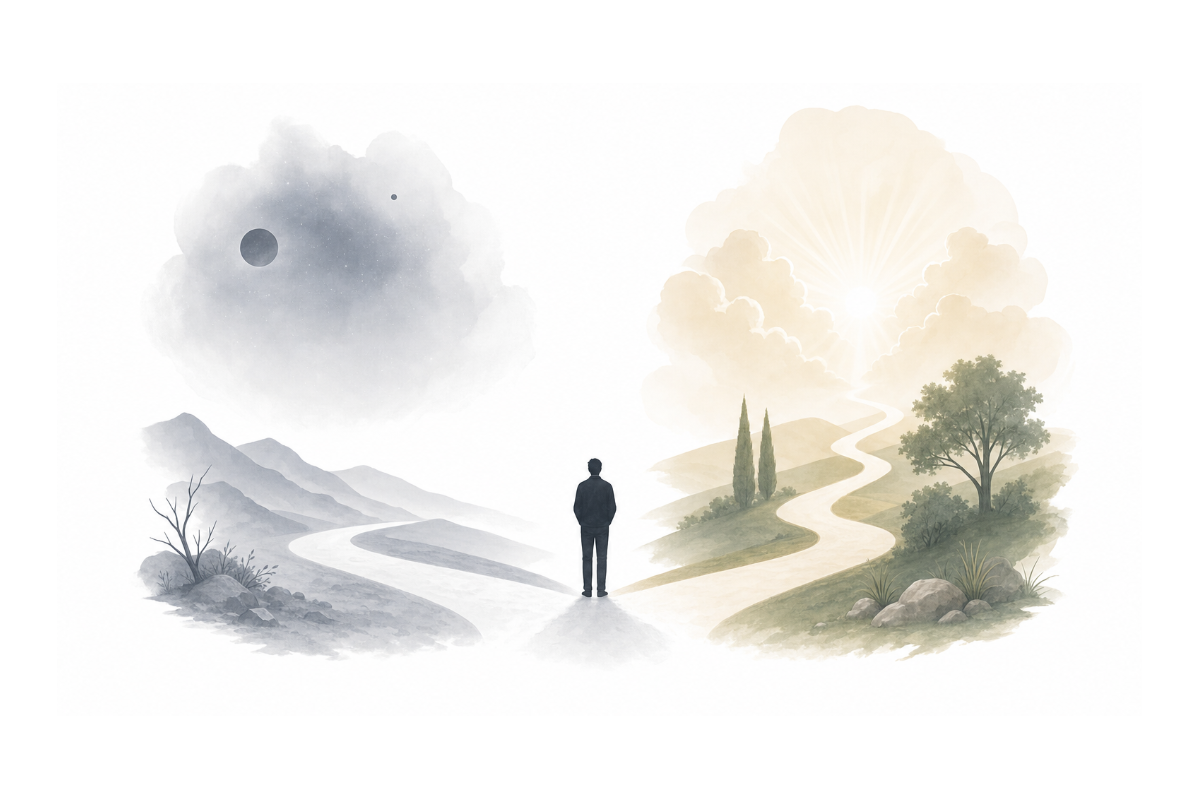
What is the ultimate nature of reality? Is everything that exists grounded in a single, necessary source of being? Or is reality, at its deepest level, pure consciousness—one without a second?
Across civilizations, some of the greatest minds have wrestled with this question. Is the world we experience truly real, or is it an appearance—something that dissolves when seen clearly? And more fundamentally: does ultimate reality exist, or is it something beyond existence altogether?
In the rich tradition of Advaita Vedanta, the answer is radical and uncompromising. The sages declare that there is only one reality—Brahman—pure, infinite consciousness. The world of multiplicity is not ultimately real but a product of Maya, a mysterious appearance born of ignorance. Liberation lies in realizing that the self (Atman) is none other than this absolute reality.
In contrast, the tradition of Islamic philosophy begins from a different starting point. It asks: why does anything exist at all? Through rigorous reasoning, its philosophers arrive at the concept of a Necessary Being—a reality that exists by its own essence, upon which all contingent things depend. This Being is one, simple, and utterly distinct from creation.
At first glance, both traditions seem to affirm unity. Yet beneath this shared language lies a profound divergence. One dissolves the world into the Absolute. The other explains the world through a transcendent source of existence.
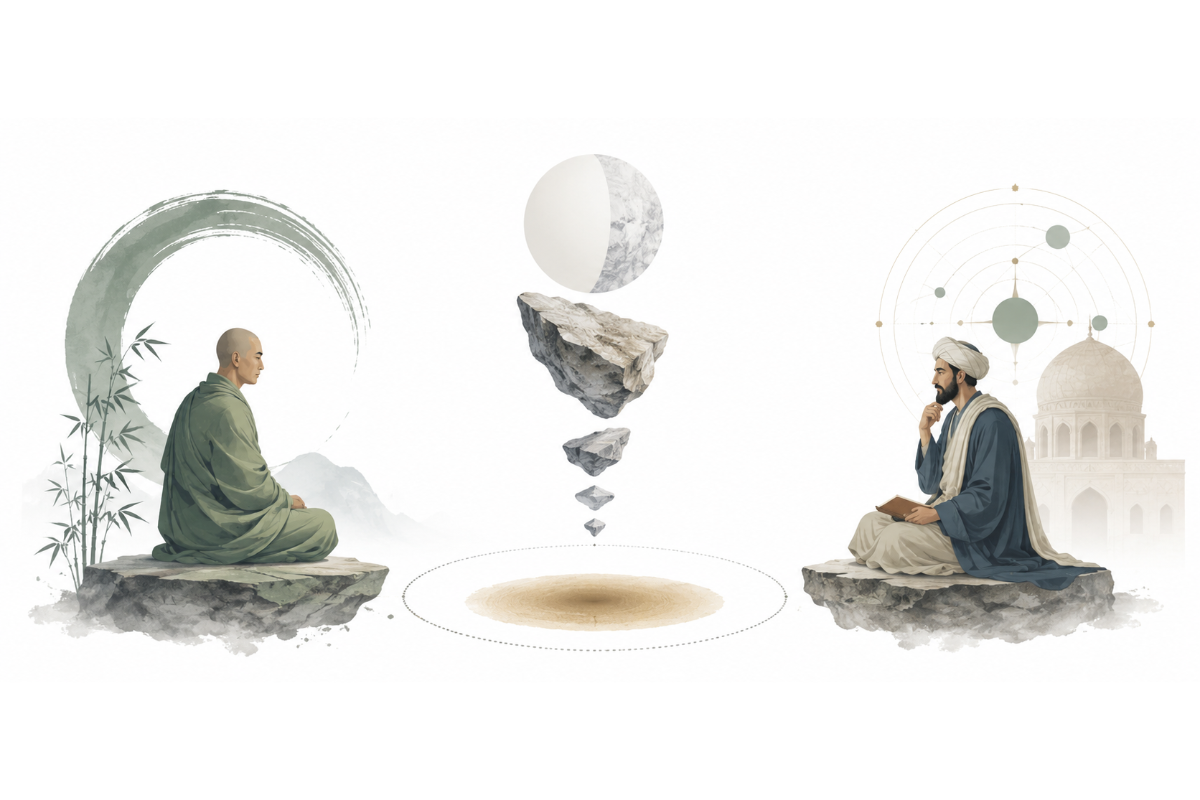
This dialogue brings these two great intellectual traditions into direct conversation. Representing Advaita Vedanta is the philosopher Adi Shankaracharya, articulating the non-dual vision of the Upanishads. Engaging him from the side of Islamic philosophy are some of the most formidable minds in classical thought: Ibn Sina (Avicenna), the architect of the Necessary Existence argument; Al-Ghazali, the theologian of spiritual and epistemological clarity; and Ibn Rushd (Averroes), the defender of reason and coherence.
Together, they explore questions that lie at the very foundation of philosophy:
- Is ultimate reality best understood as consciousness or as existence?
- Can the world be explained as an illusion without contradiction?
- What does it mean for something to exist necessarily?
- Can pure, objectless consciousness be logically coherent?
- Does true unity require dissolving multiplicity, or explaining it?
This is not merely a debate between two traditions. It is a confrontation between two fundamentally different ways of understanding reality itself.
A note on what makes this dialogue philosophically distinctive. Unlike debates between theism and atheism — which often fight over the existence of God — this conversation takes place entirely within the territory of those who affirm a supreme, ultimate reality. The disagreement is not about whether there is an absolute. It is about what it means for something to be absolute: whether absoluteness requires otherness from the world, or whether it requires the dissolution of all otherness. The two traditions have developed their answers with extraordinary rigour over more than a thousand years. This dialogue is an attempt to let those answers genuinely encounter each other — not past each other.
You don’t need prior training in philosophy to follow along. Just bring patience, curiosity, and a willingness to think deeply. Let us begin.