The Soul and the Self
Avicenna vs. Neuroscience
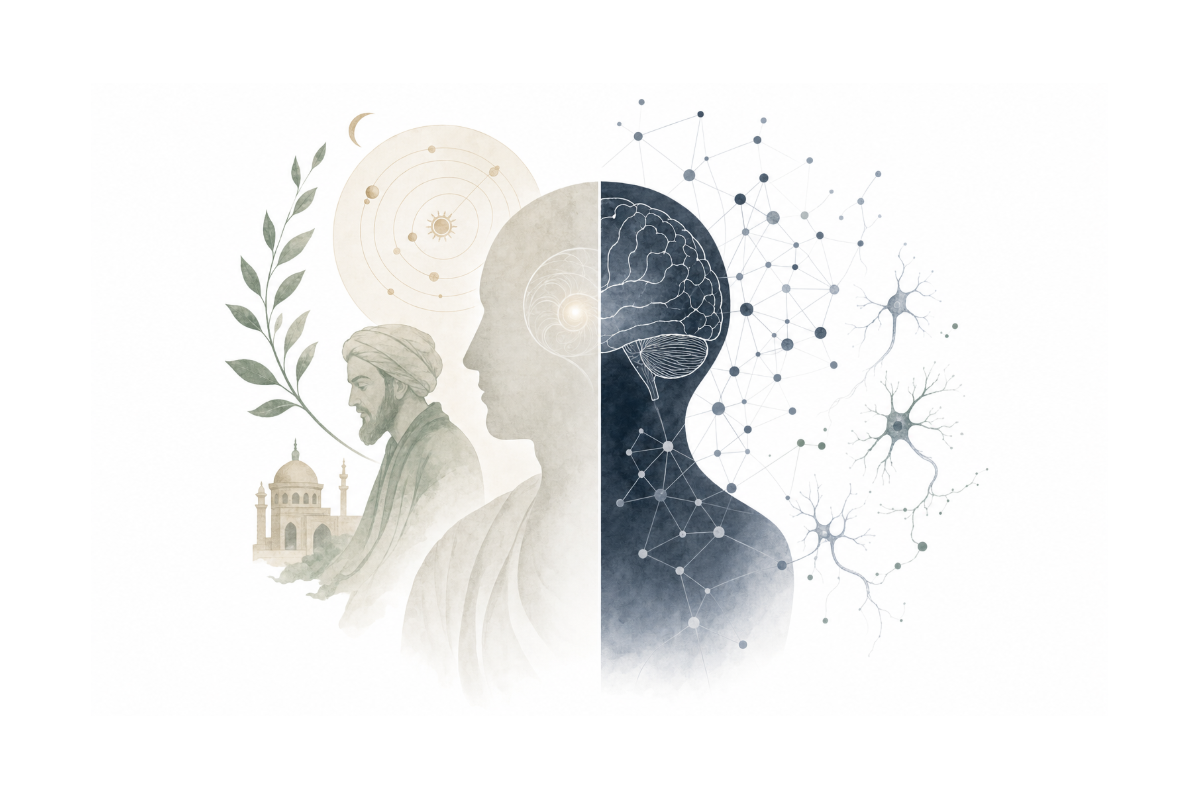
Five centuries before Descartes wrote "I think, therefore I am," a Persian philosopher in medieval Isfahan had already made a more radical claim. Ibn Sīnā (Avicenna) asked us to imagine a human being created fully formed, suspended in a void — no sensation, no memory of a body, no input from the world. What would this person know? His answer: they would know, with absolute certainty, that they exist. Not because they feel their heartbeat or see their reflection, but because self-awareness is the bedrock of all experience — prior to the body, prior to the senses, prior to any empirical datum whatsoever. This thought experiment, known as the Floating Man, was not a piece of clever rhetoric. It was a serious philosophical argument for the immateriality of the soul.
Today, that argument runs headlong into a scientific programme that has transformed our understanding of the mind. Modern neuroscience can map the precise regions of the brain that process emotion, decision, self-reflection, and identity. It can predict a person's choices seconds before they are consciously aware of making them. It can alter personality, memory, and the very sense of self with a scalpel, a drug, or a magnetic pulse. For the neuroscientist, the soul is not a separate substance that inhabits the body — it is what the body does. Consciousness is not a ghost in the machine. It is the machine's most complex operation.
What makes this confrontation philosophically unusual is that both sides have genuinely hard questions to answer. The neuroscientist must explain what philosophers call the Hard Problem: not how the brain processes information, but why that processing is accompanied by experience at all — why there is something it feels like to see red or feel grief, rather than the processing simply occurring in the dark. Ibn Sīnā must explain how an immaterial soul interacts with a physical brain, why damage to the brain so consistently alters the soul's functioning, and how an indivisible substance can be located anywhere in a material world.
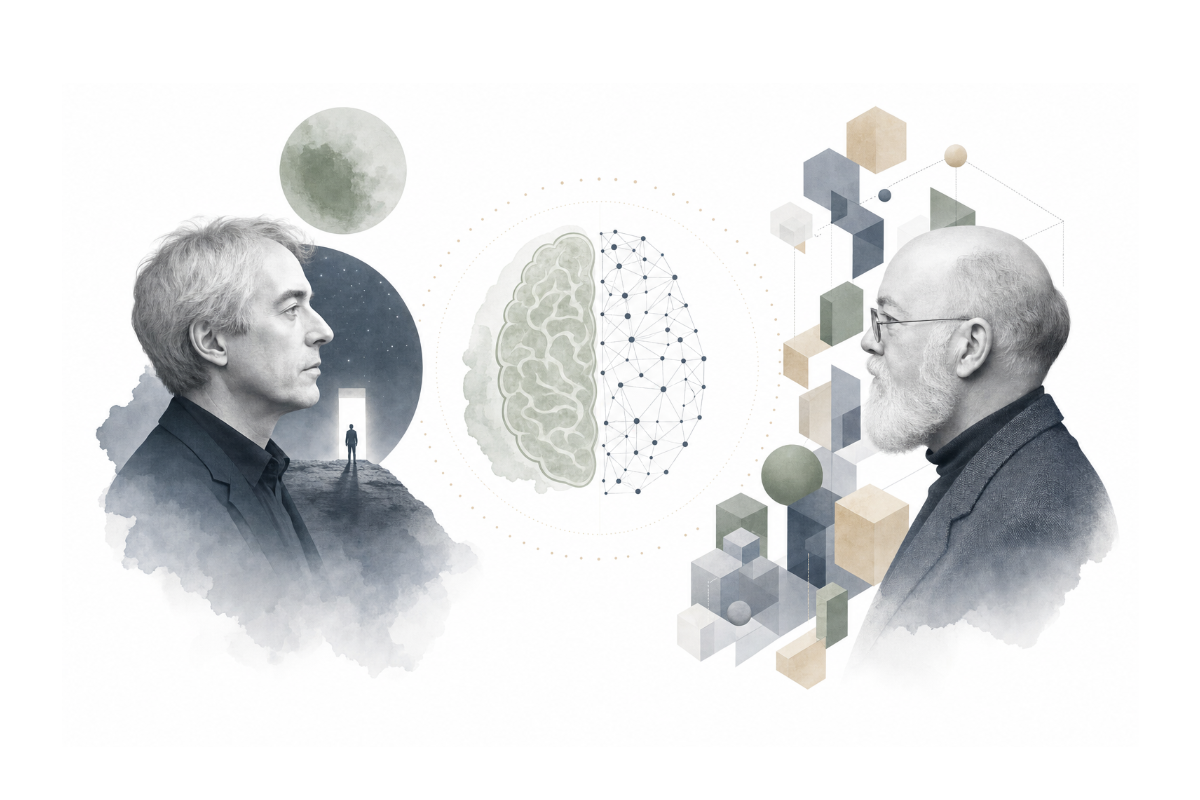
In this dialogue, these two perspectives meet across ten centuries. Ibn Sīnā defends the immateriality and unity of the rational soul — the nafs nāṭiqa — drawing on the Floating Man, the indivisibility argument, and the problem of personal identity. A Modern Neuroscientist presses the case for physicalism using split-brain research, emergence theory, and the hard evidence of what happens to the "self" when the brain is altered. Neither holds back.
- Can the Floating Man survive the neuroscientist's response that the brain is still firing in the void?
- If consciousness emerges from matter, does that make it any less real — or less mysterious?
- How does a physically divided brain produce the unified "I" that reads these words?
- If your brain were perfectly duplicated, would there be two of you — or none?
You are the subject of this inquiry. Whatever you conclude, it will be you who concludes it. That fact is either the most ordinary thing in the world, or the most inexplicable.