The Illusion of Choice?
Neuroscience vs. Existentialism
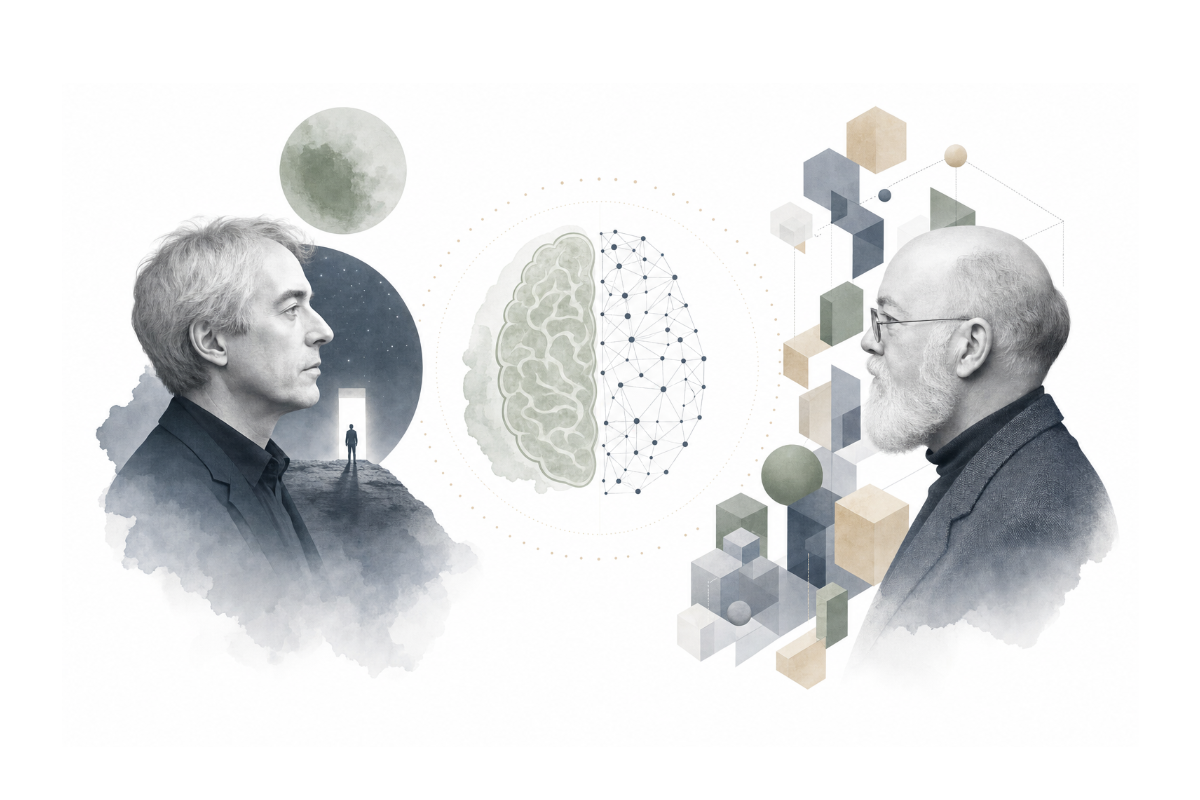
In 1943, Jean-Paul Sartre published Being and Nothingness — one of the most uncompromising defences of human freedom ever written. For Sartre, to be human is to be radically, inescapably free. You cannot hide behind your upbringing, your neurochemistry, or your social conditioning. You are your choices, and your choices are entirely your own. To pretend otherwise is bad faith — a form of self-deception that Sartre considered the defining failure of modern life.
In 1991, Daniel Dennett published Consciousness Explained — one of the most sustained attempts to dissolve the mystery of mind into the machinery of biology. For Dennett, there is no Cartesian Theater where a self sits watching the show of experience. There is no ghost in the machine. Consciousness is a product of evolution, a story the brain tells about itself — and the self is a centre of narrative gravity, a useful fiction, not a sovereign author of its own acts.
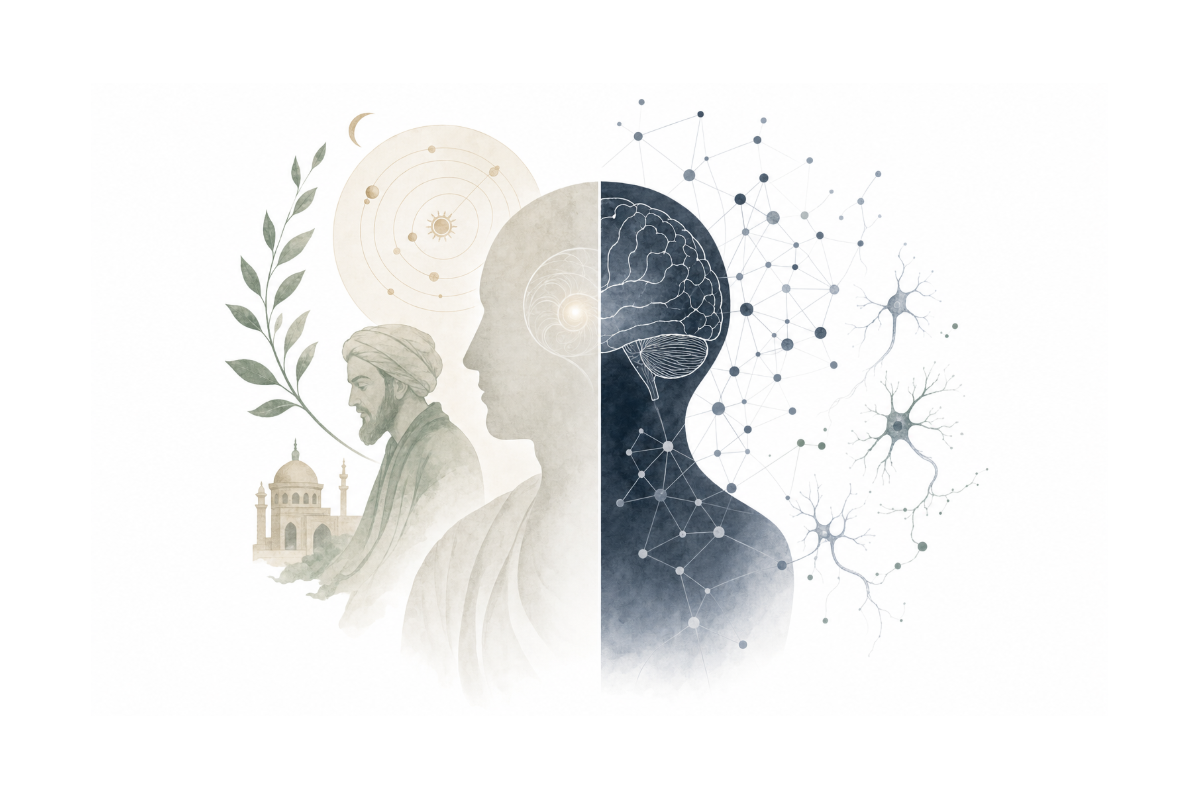
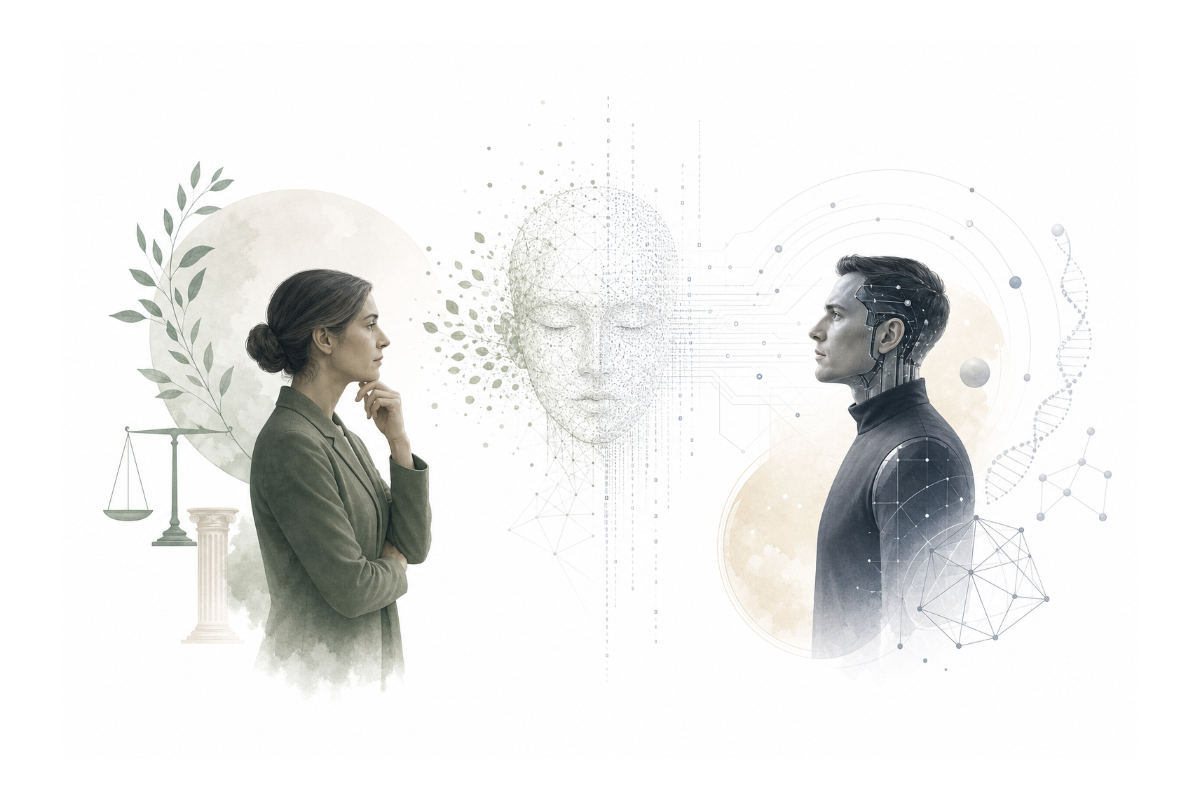
These two thinkers have never been more urgently in opposition. Neuroscience has grown bolder in its claims: brain scans appear to predict decisions before we are consciously aware of making them; genetic studies map personality onto DNA; pharmaceutical interventions alter mood, will, and identity. If the brain is the mind, and the brain is a machine, what becomes of Sartre's radical freedom? What becomes of responsibility? What becomes of you?
In the dialogue that follows, Dennett and Sartre face each other directly. At stake is not merely an academic question but the most practical one in philosophy:
- Is consciousness something the brain does — or something that cannot be reduced to it?
- Can free will survive the Libet experiments, the neuroscientist's fMRI, and the geneticist's findings?
- What is the self — a narrative fiction, or a project of radical freedom?
- If we are not free in the way we imagined, who bears responsibility for what we do?
You do not need to choose a side before you begin. Bring your uncertainty. The question of whether your choices are truly yours is one that only you can answer — if, indeed, there is a "you" capable of answering it.