Socrates and Buddha
Two Paths Out of the Cave
In the fifth century BCE, two figures emerged — on opposite ends of the known world — who would permanently alter the trajectory of human thought. Neither left a written word. Both were remembered through the accounts of devoted followers. Both were committed to a single, urgent question: How should a human being live?
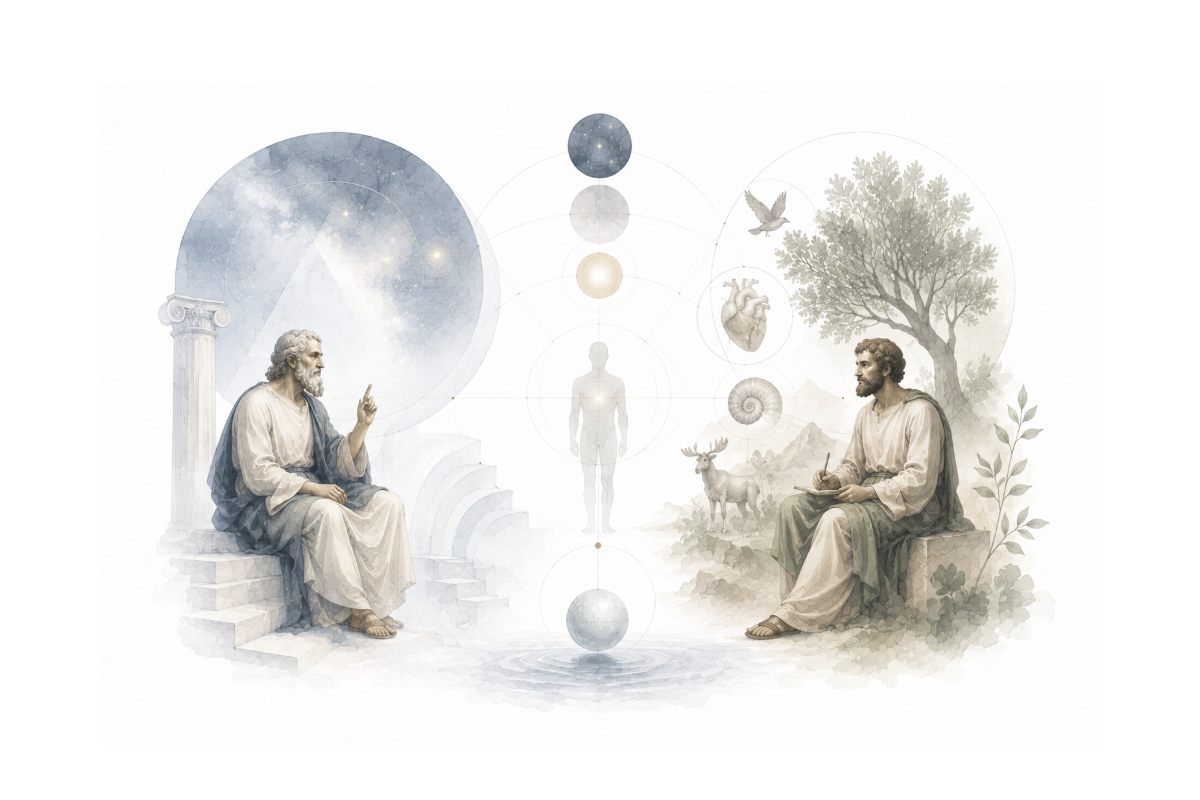
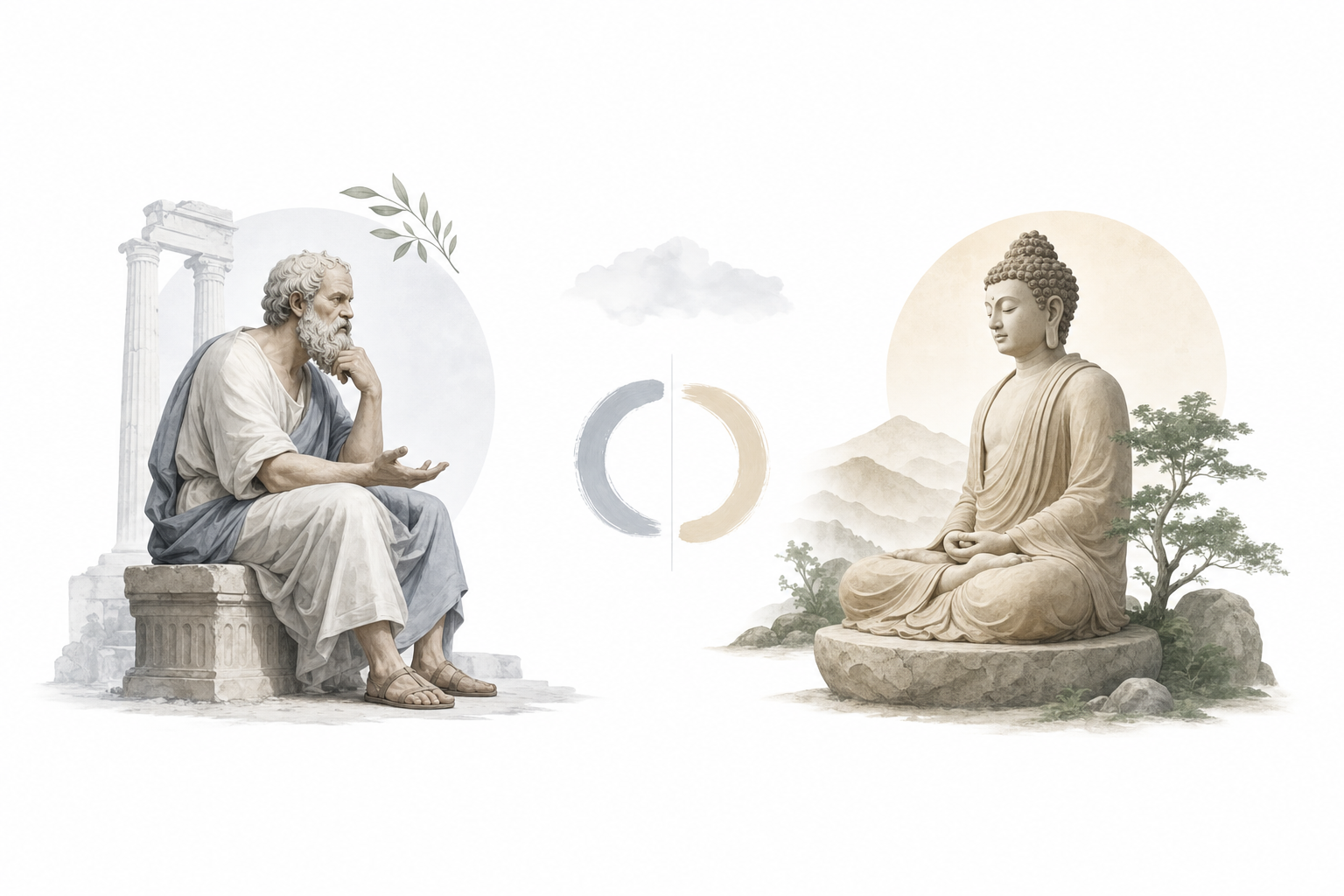
Socrates walked the streets of Athens asking questions no one wanted to answer. He claimed to know nothing, yet by his relentless questioning exposed the ignorance of those who claimed to know everything. He believed the soul — the psyche — was immortal, that true knowledge was recollection of eternal truths glimpsed before birth, and that the unexamined life was not worth living. When Athens sentenced him to death for impiety and corrupting the youth, he drank the hemlock calmly — certain that philosophy had prepared him for what came next.
Siddhartha Gautama, the Buddha, abandoned a throne to sit beneath a tree until the nature of suffering became clear. What became clear was not a God, not an eternal soul, not a foundation of fixed truths. What became clear was the nature of craving — and the liberation available to those who learn to release it. The Buddha taught that the self is not a fixed thing but a process, that suffering arises from the illusion of permanence, and that the path to liberation runs not through knowing more, but through seeing through the very habit of grasping.
These two thinkers are often compared. They deserve to be challenged. For beneath the surface agreement — wisdom matters, desire misleads, death need not be feared — lies a profound and unresolved disagreement:
- Is there a soul — an immortal self — to be cultivated? Or is the self itself the root of suffering?
- Is the cure for ignorance more knowledge — or the dissolution of the one who seeks?
- Does the examined life lead toward truth, or does examination itself become another form of attachment?
- What does it mean to die well — if there is, or is not, something that survives?
In the dialogue that follows, these two teachers meet — as they never did in history — and submit their deepest convictions to mutual scrutiny. Bring your own sense of what the good life requires. You may leave having changed your mind about which path you are already walking.